

Two loaves out of the same oven, the same day: one is dry at the edges and has grown a spot of mould before the weekend, the other still tastes fresh. The difference is not in the storage, but in the leavening.
Why sourdough wins on shelf life
Sourdough leavens the bread with wild yeast and lactic acid bacteria, and the bacteria produce acids while the dough proves. The acids give the characteristic flavour, but they also do something more important: they lower the pH of the bread, and mould does not thrive in an acidic environment. That is why it often takes several extra days before the first spot appears. The whole mechanism behind mould is covered in the guide on why homemade bread grows mould.
The acids also help the crumb hold on to its moisture, so the bread feels moist several days after baking. And sourdough doughs are often baked wetter than yeast doughs, which gives even more to spare before the bread feels dry. You notice it in the smell too: a sourdough loaf smells fresh and tangy well into the week.
The strengths of yeast bread, and the price you pay for them
Yeast is quick and predictable: the dough is fully proved in a couple of hours, the flavour is mild, and the crumb turns out airy and light. That is why the everyday bread in most Norwegian homes is yeast bread.
The price is the shelf life. Without acid the mould has free rein, and the starch hardens unhindered, so the bread dries out faster. That does not mean yeast bread is bad bread. It means yeast bread has less time, and that the right storage matters even more.
There is a middle ground too: many home bakers leaven with yeast and add a spoonful of sourdough to the dough for the flavour. The bread then gets a little of the acid, and thereby a little of the shelf life, without the long proving time.
Yeast versus sourdough
| Yeast bread | Sourdough bread | |
|---|---|---|
| Proving time | A few hours | Half a day to a full day |
| Flavour | Mild and neutral | Tangy depth |
| The crumb after a few days | Dries out faster | Stays moist longer |
| Mould | Appears sooner | Slowed by the acid |
| Freezing | Works well | Works well |
How to extend the shelf life, whatever the leavening
-
1Cool the bread completely before wrapping it
A lukewarm loaf creates condensation in any bag, and condensation is mould's best friend.
-
2Store the bread whole
Slice as needed from the same end, and stand it cut side down. Slices dry out many times faster than a whole loaf.
-
3Room temperature in a bag that breathes
Homemade bread then stays fresh for 7 to 10 days, against 2 to 3 days in a plastic bag. Yeast bread sits at the lower end of the range, sourdough at the upper.
-
4Freeze what you cannot get through
Both types freeze excellently. The guide on freezing bread the right way shows how to keep the crust.
More detail on what you can expect from different breads is in the guide how long homemade bread stays fresh.
How you notice the difference in practice
For the first couple of days the loaves are much the same: both have a crisp crust and a soft crumb, and both taste freshly baked. It is from day three that the difference shows.
The yeast loaf starts to feel drier at the edge of the slice, and towards the end of the week it is best toasted. The sourdough loaf stays moist and fresh longer, and the flavour often develops for the better over the first few days. The condition is the same for both: whole storage, room temperature and a bag that breathes. In a plastic bag both lose, only at a different pace.
Want to try sourdough?
The threshold is lower than its reputation suggests. Start with a sourdough starter, and keep it alive with the routine in the guide on storing and feeding a sourdough starter. If you want a concrete recipe to begin with, the rustic sourdough boule is a good place to start. And once the first loaf is baked, the guide on storing sourdough bread takes over.
Frequently asked questions
Can I make yeast bread keep longer?
Is shop-bought sourdough as long-lasting as homemade sourdough?
Why does sourdough bread grow mould less often?
What about rye bread, does it keep even longer?
Whatever the leavening: let the bread breathe
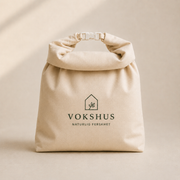
Vokshus Bivoks™ bread bag in cotton and linen: keeps both yeast bread and sourdough fresh longer.
See the bread bag →- Keeps bread fresh for 7 to 10 days
- ·
- Closes with a clip
- ·
- 365-day guarantee