

A plastic-free kitchen doesn't mean throwing out everything you own and starting from scratch. The best swaps happen one at a time, as things wear out. Here are nine easy swaps, sorted from biggest impact to smallest.
Why cut plastic in the kitchen?
Two reasons weigh heaviest. The first is microplastic: plastic in contact with food can shed tiny particles whose long-term effects we still don't fully understand. The second is waste: single-use plastic like food bags, cling film and freezer bags piles up fast in an ordinary household.
The third reason is more everyday: many natural materials simply do the job better, and bread is the clearest example. And most of the swaps pay for themselves over time, because reusable alternatives last for years.
The 9 swaps for a plastic-free kitchen
-
1Plastic bag → beeswax bread bag (start here)
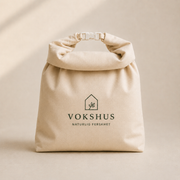
The bread bag is the easiest high-impact swap: one bag replaces 200+ plastic bags a year with weekly baking, and it actually makes the bread better. In a plastic bag the moisture from the bread is trapped, so the crust turns leathery and the condensation causes mould; a beeswax-lined bag of cotton and linen breathes, and the bread stays fresh for 7-10 days with a crisp crust.
Let the bread cool completely on a rack before you put it in the bag, close it with the clip and store it at room temperature, never in the fridge. The Vokshus bread bag measures 30 × 43 cm and holds most home-baked loaves; you may want to read more about why beeswax beats plastic for bread storage.
-
2Cling film → wax wrap
Wax wrap covers bowls and wraps up cheese, fruit and vegetables: the same principle as the bread bag, in sheet form. Warm the wrap lightly between your hands so the wax seals around the edge; rinse in cold or lukewarm water with mild soap, and avoid raw meat and raw fish.
-
3Plastic tubs → glass with lids
Glass doesn't take on smells or colours, is dishwasher-safe and can be used for reheating. Replace the plastic tubs as they turn cloudy or crack, and choose two or three sizes that stack well inside each other.
-
4Freezer bags → reusable silicone bags
Washable, airtight and perfect for freezing bread slices, berries and dinner leftovers: whatever you don't eat within a week or so, you freeze. Slice the bread before freezing, so you take out exactly what you need and thaw it in the toaster.
-
5Plastic sponge → compostable washing-up brush
Ordinary washing-up sponges shed microplastic straight into the sink every time you scrub. Brushes made of wood and natural fibre do the same job: hang the brush up to dry between uses, and replace only the head when it's worn out.
-
6Disposable coffee cup → travel mug
Disposable cups usually have a plastic lining inside, even the ones that look like cardboard. Choose a stainless steel travel mug and keep it in the car or your bag, so it's there when you need it.
-
7Plastic water bottle → stainless steel
A steel bottle keeps your drink cold or hot for longer, adds no taste and lasts for many years. Choose a bottle with a wide opening (it's easier to clean) and leave it open to dry overnight.
-
8Plastic-wrapped vegetables → loose produce + reusable nets
Loose fruit and veg saves both plastic and money: you buy exactly the amount you need. Keep lightweight cotton nets together with your shopping bags, so you don't forget them; they handle a normal machine wash.
-
9Disposable baking paper → reusable baking mat
A baking mat of silicone or glass fibre replaces roll after roll of baking paper, and the bread releases just as easily. Check the manufacturer's maximum temperature before use, and be pragmatic: for Dutch-oven bread, a little baking paper is still a fair compromise.
How to get started
Don't buy everything at once. Choose one swap (the bread bag is a good place to start, since you notice the effect on the very first loaf of the week) and build from there.
Let the changeover follow your household's own rhythm: when the cling film runs out, you buy wax wrap; when a plastic tub cracks, you replace it with glass. That way the plastic-free kitchen becomes a habit, not a project.
Frequently asked questions
Is it expensive to go plastic-free in the kitchen?
Are natural materials less hygienic than plastic?
Do I have to replace everything at once?
How long does a beeswax bread bag last?
Start your plastic-free kitchen with the bread
Vokshus Bivoks™ bread bag in cotton and linen: crisp crust for 7-10 days.
See the bread bag →- 365-day guarantee
- ·
- Free shipping over 400 kr
- ·
- Delivery 7-10 days