
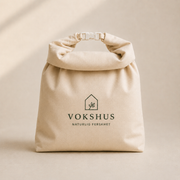

You take a freshly baked loaf out of the oven, let it cool on a rack, and then the question arises: where should the bread go? In a bread bin, a plastic bag or a beeswax bread bag? The right bread storage decides whether the crust stays crisp for days, or whether the bread is soft by the next morning.
Why bread storage matters so much
A freshly baked loaf is made up of two parts that want completely different things. The crust wants to be dry and crisp, while the crumb (the soft inside) wants to hold on to its moisture. From the moment the bread has cooled, the moisture travels from the inside outwards.
Good storage is all about balance: the bread must breathe enough that the crust does not turn soft from condensation, yet be protected enough that the crumb does not dry out.
The plastic bag: a fast track to a soft crust and mould
Plastic does not let air through. The moisture from the bread settles as condensation on the inside of the bag and soaks straight into the crust, which turns soft and chewy within a few hours. And because mould thrives in damp, closed environments, the first spots tend to appear after 2-3 days. If you want to understand the mechanism, we have written a separate article on why homemade bread goes mouldy.
The bread bin: a classic with a few weaknesses
The bread bin has stood on Norwegian kitchen counters for generations. A good bin with air holes gives decent air circulation, protects the bread from light and knocks, and keeps the crumb soft for several days.
The most common weakness is condensation against the lid, especially if the bread is put in while it is still warm. That moisture always finds its way back to the bread and turns the crust soft on top. The bin also takes up a fixed spot on the counter and needs regular cleaning: crumbs and moisture in the corners otherwise become a haven for mould spores.
The beeswax bread bag: breathes, protects and takes up no space
The third solution is a bread bag sewn from cotton and linen, with a thin layer of natural beeswax and jojoba oil on the inside. The fabric breathes, so moisture escapes and condensation never has time to build up, while the wax layer slows the drying out. The result is a crisp crust and fresh bread for 7-10 days.
The bag closes with a simple clip and can be hung on a hook. The Vokshus bread bag measures 30 × 43 cm, roomy enough for a large sourdough boule or an ordinary tin loaf, and can be reused for 12 months or more. When the wax layer wears down, the bag can easily be re-waxed.
Comparison: bread bin, plastic bag and beeswax bread bag
| Feature | Plastic bag | Bread bin | Beeswax bread bag |
|---|---|---|---|
| Crust | Soft and chewy after a few hours | Fairly good, but can turn soft from condensation against the lid | Stays crisp for days |
| Shelf life | 2-3 days before mould | Better than plastic, but condensation can shorten it | 7-10 days |
| Air circulation | None, the moisture is trapped inside | OK with air holes | Very good, the fabric breathes |
| Space in the kitchen | Little | Takes up fixed counter space | None, can be hung on a hook |
| Maintenance | Thrown away after use | Needs regular washing | Shaken out for crumbs, wiped down as needed |
| Environment | Single-use plastic and microplastic | Good, lasts for years | Good, one bag replaces over 200 plastic bags a year |
An honest conclusion: what should you choose?
The bread bin is a perfectly fine solution: if you have one you are fond of, there is no need to throw it out. But on the two points that matter most to home bakers, a crisp crust and a long shelf life, the beeswax bread bag wins. It breathes better and avoids the condensation problem entirely.
Does not let air through. The moisture is trapped inside, the crust turns soft within a few hours, and mould tends to appear after 2-3 days.
The fabric breathes, condensation never has time to build up, and the crust stays crisp day after day.
The plastic bag, on the other hand, should be retired, at least for bread. If you want to avoid more classic pitfalls, you can read our guide to common bread storage mistakes.
Frequently asked questions
Can you use a bread bin and a bread bag at the same time?
How often should the bread bin be cleaned?
Why does bread go soft in a plastic bag?
How long does bread stay fresh in a beeswax bread bag?
Test the bag against your bread bin
A Vokshus beeswax bread bag costs from 299 kr, with a quantity discount when you buy several bags, and with a 365-day money-back guarantee you can safely test it against your bread bin at home in your own kitchen.
Vokshus Bivoks™ bread bag in cotton and linen. Crisp crust for 7-10 days.
See the bread bag →- 365-day guarantee
- ·
- Free shipping over 400 kr
- ·
- Delivery 7-10 days